Diagnosing blurry photos
Tell focus misses, camera shake and subject motion apart, and fix each one.
Course: Camera basics · 9/18

Try this lesson in the simulator
Three causes, and how to tell them apart
Almost every soft photo comes from one of three things. Look at what is sharp and how the blur runs, and you can tell which.
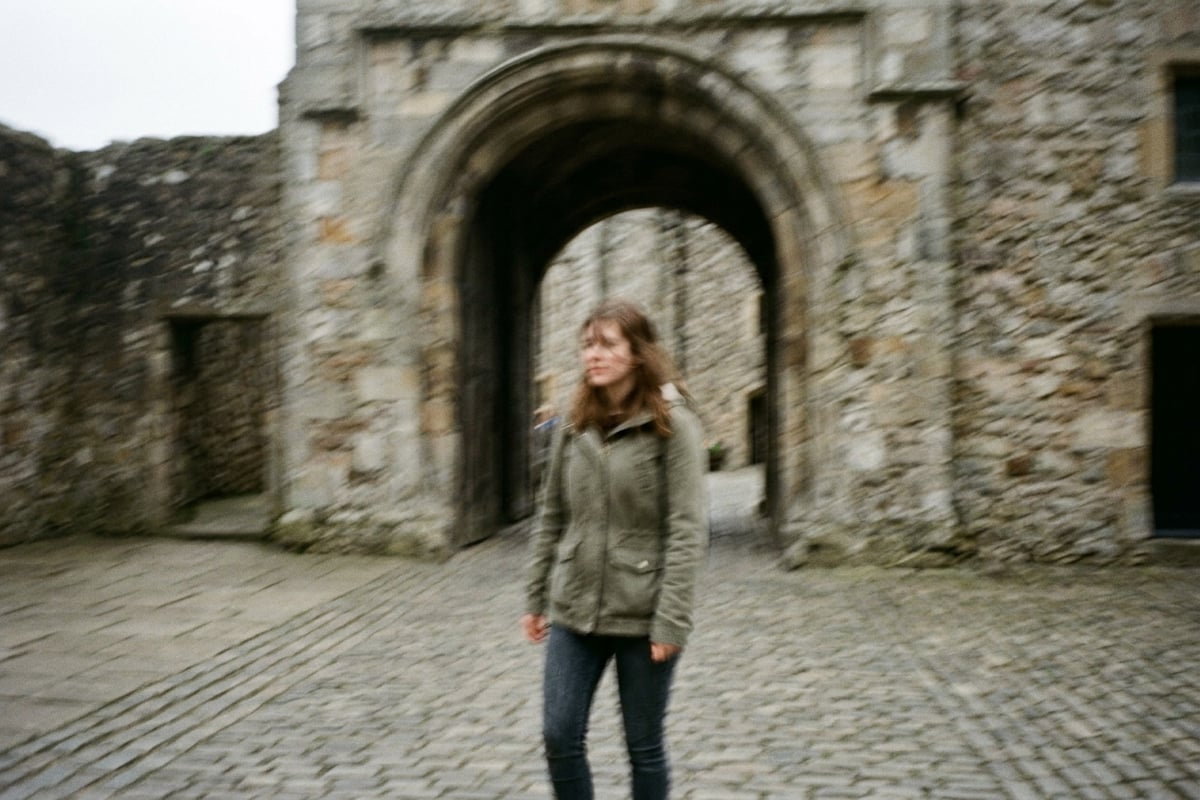
Focus miss: the wrong thing is sharp (say the background) and the subject is soft. Camera shake: everything is smeared the same way, in the same direction. Subject motion: only the moving thing streaks along its path, the rest is sharp.


① Focus miss: what IS sharp?
First find what is sharp in the photo. If it is not your subject, the camera focused on something else: the AF point was not on the subject.
The camera focuses on whatever is under the AF point. Click the subject to move the point there, half-press, and shoot only after the green frame appears. A smaller aperture (bigger F number) widens the sharp zone and forgives small misses.
② Camera shake: the 1/focal-length rule
Hands tremble a little (8–12 times a second), and while the shutter is open that movement is recorded. The longer the lens, the more the same wobble smears the picture.
Rule of thumb: keep the shutter faster than 1/focal length (70 mm → 1/70 s, in practice 1/80). Stabilisation buys a few extra stops, but does nothing for a moving subject.
To stop shake: a faster shutter (open the aperture or raise the ISO to keep the brightness), stabilisation on, or the tripod. Below, the stabiliser is switched off so the shake is easy to see.
③ Subject motion: a tripod cannot fix it
A moving subject travels across the frame while the shutter is open, so it streaks along its direction of travel. Strolling people need about 1/250–1/500 s, runners 1/500–1/1000 s, cars 1/1000 s or faster.
A tripod holds the camera still, so the background stays sharp, but it cannot stop the subject. Only a faster shutter does. Streaks are not always a mistake: use them on purpose to show speed.
Practice in the simulator
- Handheld, a sharp photo of a walker
Hint: Tripod off. Click the walker to put the AF point on them, use 1/500 s or faster, half-press until green and shoot as they pass. The coach should say "sharp". - On the tripod: sharp scene, streaked walker
Hint: Tripod on, shutter 1/15 s or slower, with a walker in the frame. Only the walker should streak. - On purpose: a shaky handheld photo
Hint: Stabiliser off, tripod off, zoom to 70 mm and use 1/4 s or slower. Everything smears the same way.
Try this lesson in the simulator
Key takeaways
- Look at what is sharp: wrong place = focus, everything the same = shake, only the mover = subject motion.
- Shake: shutter faster than 1/focal length, stabiliser on, or tripod. Motion: a faster shutter; a tripod does not help.
Terms in this lesson
- Image stabilisation (손떨림 보정 (IS·IBIS)): The sensor (IBIS) or a lens element shifts against your hand movement, so you can use slower shutters hand-held.