White balance
See how the colour of light changes the picture, and how WB corrects it.
Course: Camera basics · 10/18
Try this lesson in the simulator
Light has a colour
Tungsten bulbs are orange (about 3000 K), midday sun white (about 5500 K), shade and blue sky blue (7000 K and up). This is the colour temperature, in kelvin.
Our eyes adapt and see white paper as white anyway; the camera has to be told which light counts as white.
WB corrects the opposite way
Set WB to tungsten and the camera treats orange light as white, cooling the whole picture. Shoot daylight on tungsten WB and the picture turns blue.
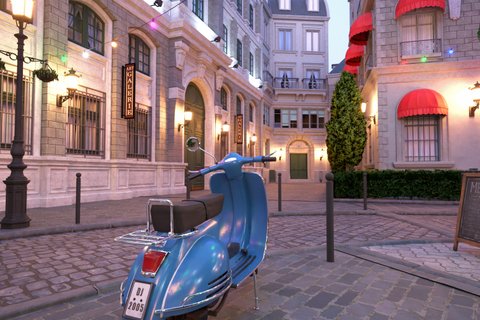
To keep the warm mood of an evening street, photographers often leave WB on daylight on purpose.
Practice in the simulator
- One picture with WB on tungsten
Hint: Pick the bulb icon under the picture. - One picture with WB on daylight
Hint: Pick the sun icon and compare the warmth.
Try this lesson in the simulator
Key takeaways
- Every light has a colour temperature; WB decides what counts as white.
- Auto WB is usually right, but the "wrong" WB can be the better mood.
Terms in this lesson
- White balance (화이트 밸런스): Corrects the colour cast of the light so white things look white, from warm tungsten to cool shade.
- Colour temperature (색온도 (K)): The colour of a light in kelvin: low numbers are warm and orange (candle, tungsten), high numbers are cool and blue (shade, sky).
- RAW (RAW): The sensor data before the camera applies colour, tone and sharpening, so white balance and brightness can be changed later with little loss.
- JPEG (JPEG): The finished, compressed picture with the colour, tone and sharpening already baked in; small and ready to share, harder to fix later.